
Do Whatever You Can!
The Rohingya crisis in Myanmar. What should we be doing in the face of global evil and suffering?
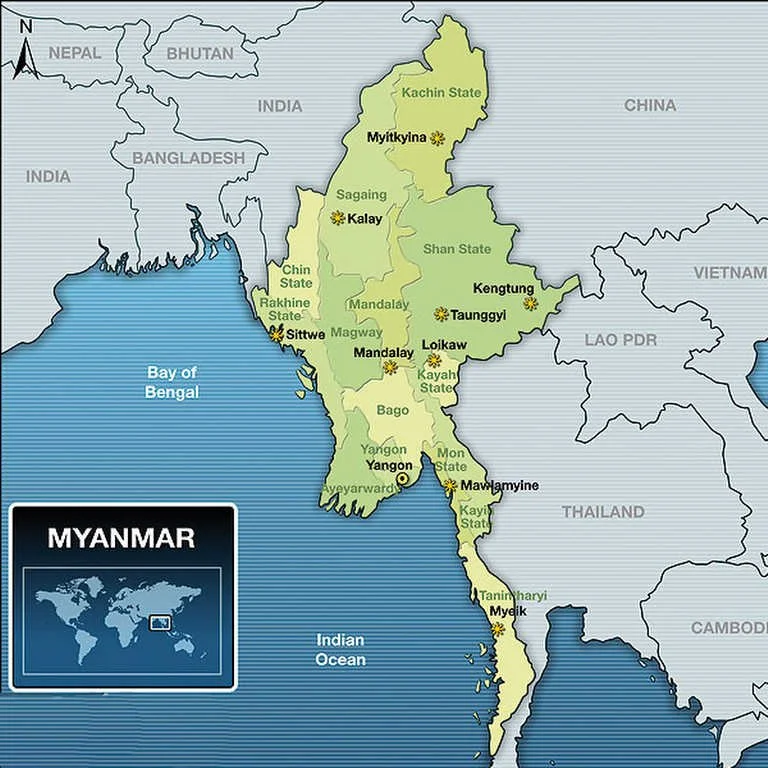
Myanmar (Burma) is roiling. In recent weeks, some 370,000 Rohingya Muslims have fled from northern Rakhine State (western Myanmar) to neighboring Bangladesh. The underlying tensions driving this mass exodus are somewhat complicated, with roots going back decades. Rohingya Muslims (immigrants from Bangladesh over the past century or so, who are denied rights to citizenship), Rakhine Buddhists (the majority group there, some of whom still want independence from Myanmar), and the Burmese military (mostly Buddhist soldiers, who principally protect the interests of the Bama ethnic majority group in Myanmar) have a history of fighting violently with one another. The unresolved, and seemingly unresolvable, conflicts are wreaking havoc in this region.
The recent flare up, which has received extensive media attention globally, stems from the military's harsh retaliation for the latest killing of a dozen soldiers by Rohingya militants (the Arakan Rohingya Salvation Army) in August. Homes are being burned, many hundreds are dead, and hundreds of thousands of people have been displaced from their villages (on top of the 120,000 displaced people already living in squalid camps in Rakhine State as a result of previous conflicts). Many of these desperate refugees are living in makeshift tents, starving, and lacking many basic necessities. Their predicament is grim.
Kofi Annan, former U.N. General Secretary, published the final report of the Advisory Commission on Rakhine State this past September 2016, before the latest surge of violence. His penetrating observations of the causes and challenges to peace that face the people there paint a bleak future for the region. This past week, the current High Commissioner of Human Rights at the United Nations, Zeid Ra'ad Al Hussein, went even further in his condemnation of the treatment of the Rohingya, calling the situation a classic example of ethnic cleansing, a charge vehemently denied by the Myanmar government as unwarranted and inappropriate. However the actions of the military will ultimately be judged, the problem has been steadily worsening over the past five years, and has recently taken a dramatic turn for the worse, with no resolution in sight.
If you're at all like me, you know what it is like to reel back in horror from such destruction and suffering. You want to do something to help, but the problems in places like Myanmar seem so massive, too intractable, and thus overwhelming. In the case of the Rohingya, very few (if any) avenues are even open outside the Muslim world to send aid directly to the refugees. As a result, you may become paralyzed or simply retreat into the perceived safety of your own, "safe" world. Yet, as you also well know, as understandable as any of these responses may be, they can't be where we end up.
As Christians, we know we are called to keep caring and keep doing whatever we can to help. The Apostle Paul taught us, “Do not be overcome by evil, but overcome evil with good” (Romans 12:21). I don’t have any illusions that whatever I do, or we do together, will overcome all the evil in the world. Yet, continually infusing good into a troubled, darkened world remains our best and most powerful counter-force to the destructive powers wreaking havoc globally. None of us can do it all, but each of us must do whatever we can. Wherever and for whomever we most feel called to serve is where we should start. (See chapter seven, “Overcome Evil with Good,” in my recent book, Saying Yes to God.)
Soon, 125 students will crowd into one or more of my three classes for the start of the next semester at a Christian seminary, where I teach. Our school is over 400 miles from Rakhine State, over a range of mountains. Not many of my students come from there or will ever travel there. However, many of them come from other regions in Myanmar where their people have suffered persecution, discrimination, war, hunger, intense poverty, and many other kinds of suffering due to numerous causes. Upon graduation, all will scatter throughout Myanmar to bring the light and love of Christ to hundreds of villages and cities, where hope is in short supply. We're teaching them to do what they can to share the Gospel, build up their churches, develop their communities, promote peace, and build bridges to Buddhists, Muslims, and others along the way.
I’m frequently asking the students questions such as, “How does Jesus’s teaching on peace apply in a war-torn nation?” “How does Paul’s teaching on grace, love, and Christian community relate to the challenges the churches face in the impoverished Chin Hills? ...in the internally displaced people (IDP) camps in Kachin State? ...in the jungles and villages where the Karen people are struggling to survive?” “What is the real relevance of Christ and the Christian faith on the many mission fields where hundreds of students and recent college and seminary graduates volunteer for months, and sometimes years?”
Teaching the Bible and Christian spirituality to future ministers and offering leadership workshops for pastors does not stop the violence in Rakhine State, end the war in Kachin State, or develop villages throughout the country. Yet, it prepares current and future leaders to do what I could never do on my own. Teaching and coaching is what I can do, and so I pour myself into doing that as well as I can.
How about you? What are you doing? It probably won't be what I'm doing. You have your own interests, resources, and opportunities. You have your own calling.
What is the good that is right in front of you that you can do? Do it. What is the cause that touches your heart most deeply? Find a way to get involved. Which global crisis most troubles you? Google how to help, and commit yourself to contributing financially or by volunteering. What matters most is that you do something that corresponds to the level of global need, the intensity of your concern, and the resources with which God has entrusted you.
Don't be overwhelmed by the evil and suffering in the world. Rather, overcome evil with good. Do something.